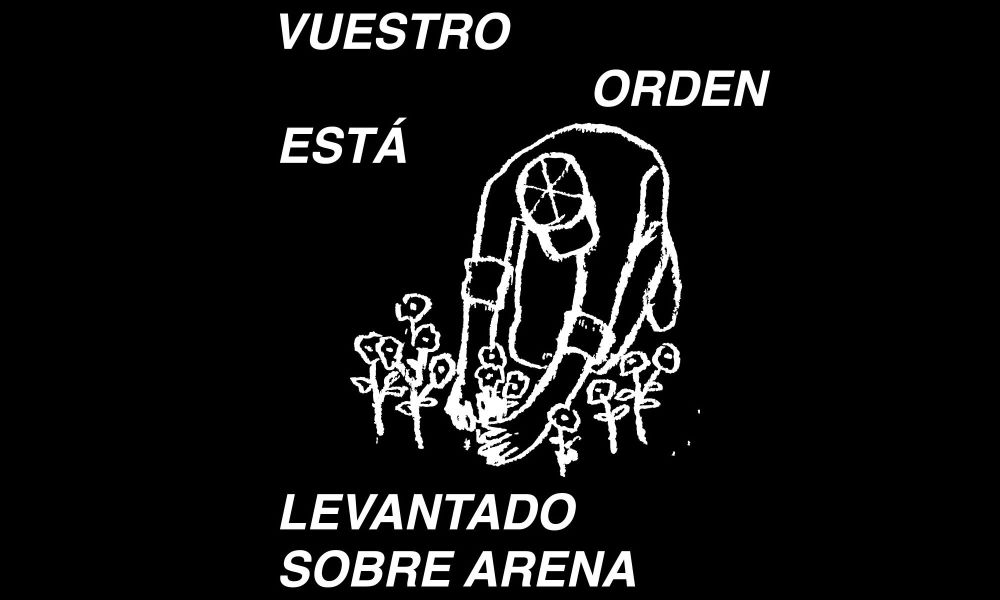
Vuestro orden está levantado sobre la arena. Nosymmetries
Exhibition at La Capella
From 10/03/2026 to 12/04/2026
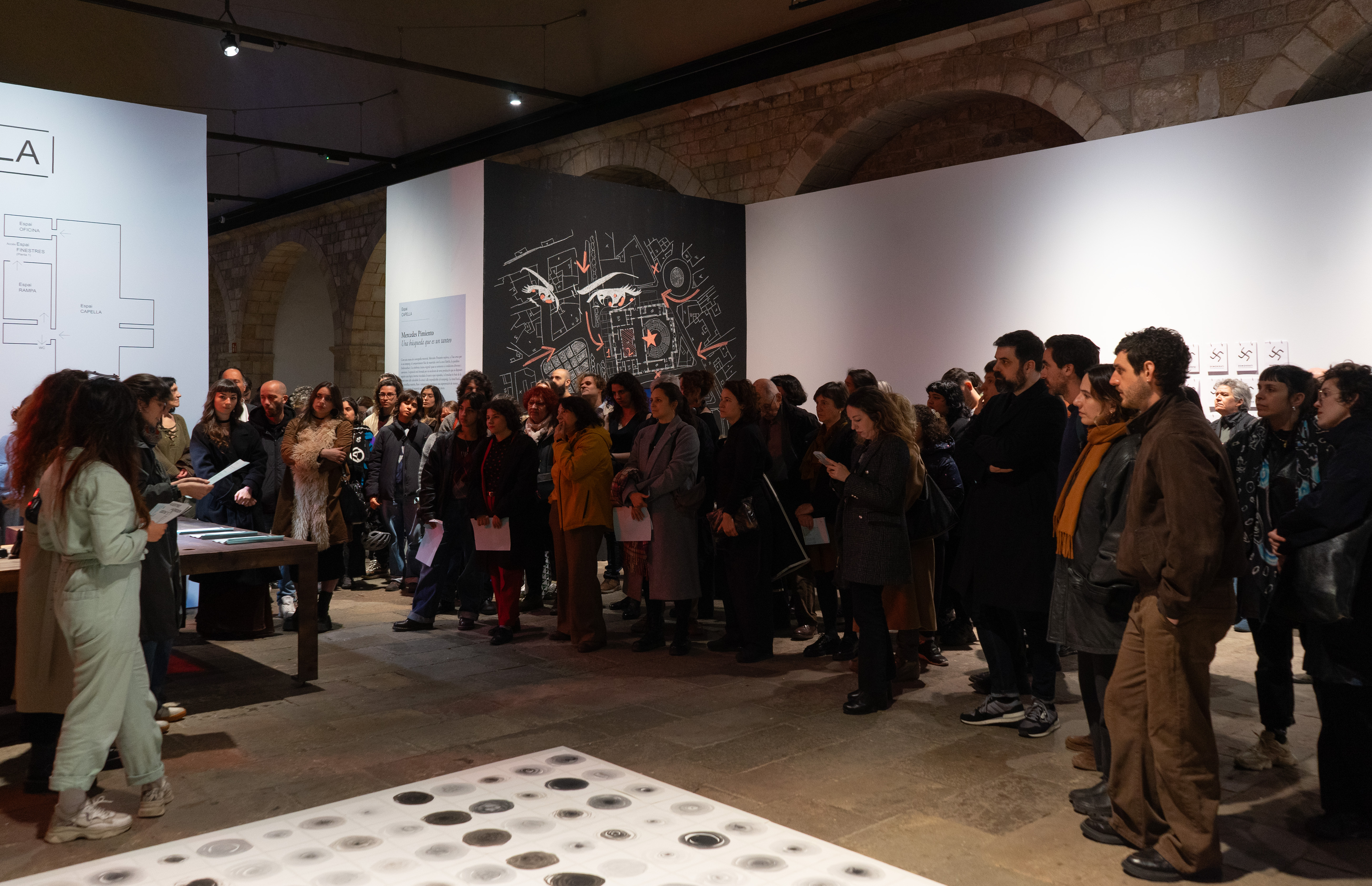
Opening: 10/03/2026 at 6p.m
Nosymmetries is a project by Idensitat which, through the investigation and activation of artistic processes, has focused on the critical exploration of the concept of democracy.
The exhibition Vuestro orden está levantado sobre la arena is part of the process developed by the working group comprising Anna Peixet and Calbet, Federica Pagano, Laura Arensburg, Maria Kastillejof, Ramon Parramon, Santiago Echeverri and Santiago Fernández Honrubia, who present their artistic works, and which is curated by Angelica Tognetti, Irati Irulegi and Vanesa Peña Alarcón.
As part of the process leading up to the exhibition, Marwa Arsanios, Núria Güell, Adrian Schindler and Ana Teixeira Pinto have participated as invited guests.
The different approaches to the concept of democracy invite us to question its relevance, its wear and tear, or the need to participate in its radical transformation, collectively activating an exercise in critical imagination.
A~S~C~M. anna peixet i calbet
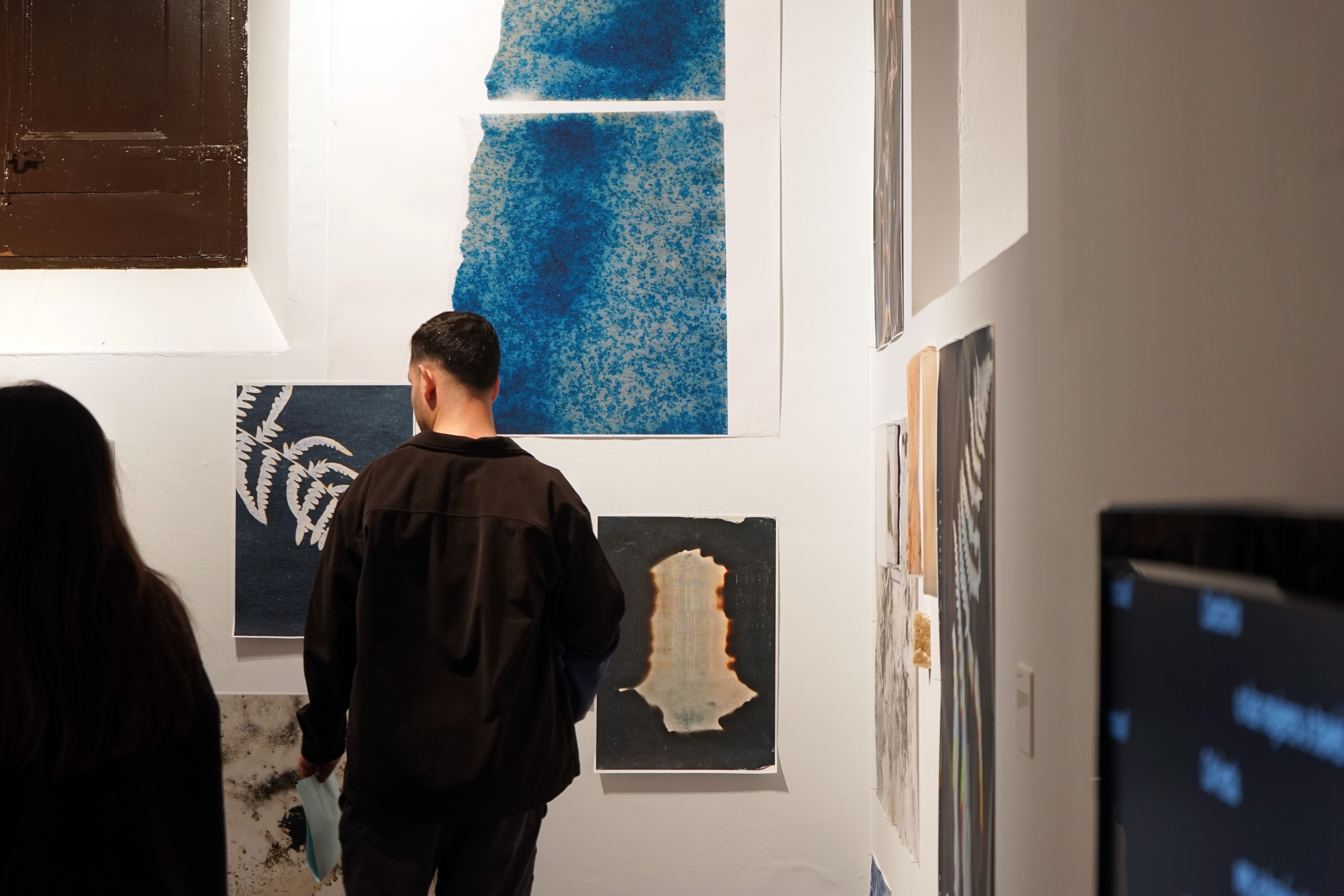
This research understands democracy as a material ecology of relationships and in(f/t)ra-structures that sustain life in common: in wet ecosystems these relationships manifest as living assemblages between water~sediments~bodies~microorganisms.
When these territories are degraded, the damage, as well as being ecological, is also democratic: the conditions for living and caring together are eroded. Towards these wounded landscapes, life (res/ex)ists ruderal-ly: fragile, intra-dependent and situated in the context of the capitalocene. This archive does not represent these ecosystems, but rather records their (res/ex)-istences. Photographs, cyanotypes, stones and paper records function as material traces of these altered, yet active, relationships.
This image becomes an index and contact,
NEVER a neutral representation.
this investigation is articulated through micro-gestures: walking stopping
recording returning : slow practices that friction the
logics of extraction and acceleration, of how to co-habitate, without resolving, the relationships that make possible /still/ shared life.
Ses Feixes (IBZ), l’Albufera (VLC), Urdaibai (EH), Delta del Llobregat (BCN).
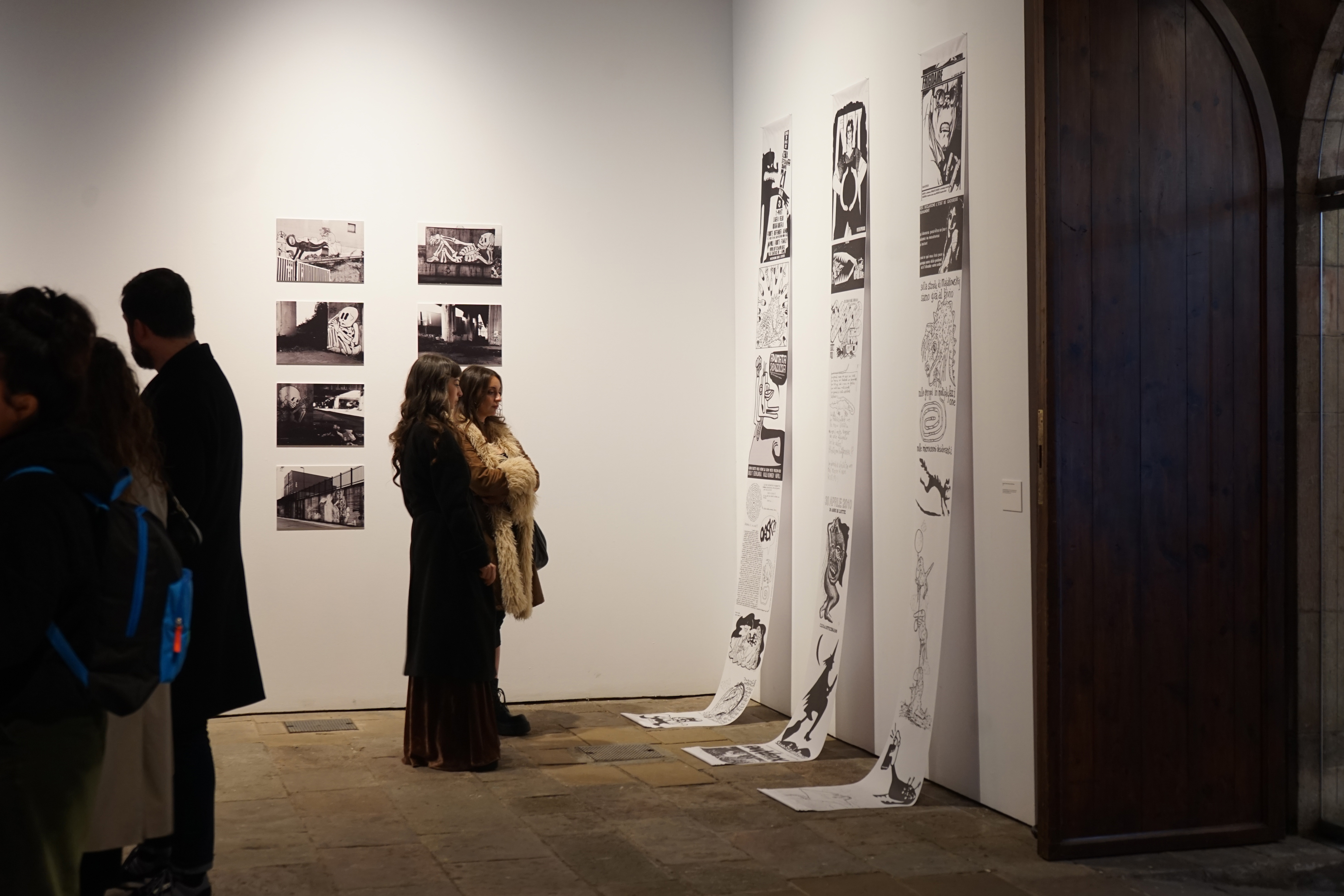
Images of Desiring Otherness. Federica Pagano
This work brings together archive images linked to the CSOA Officina 99 and photographs taken in the territory of East Naples, where the social centre is located. Throughout this half-century of the history of the Italian autonomous movements, a monstrous imaginary reappears in different forms.
The monster denounces the violence of ‘environmental anti-southernism’, embodying a figure whose existence is rejected and marginalised. But the monster also embodies the deliberate choice to occupy the margin. This ‘place of deprivation, wound and unfulfilled desire’ is reclaimed as a ‘space of creativity and power, in which we find ourselves again and act in solidarity’, as ‘a thousand longing microcosms’.
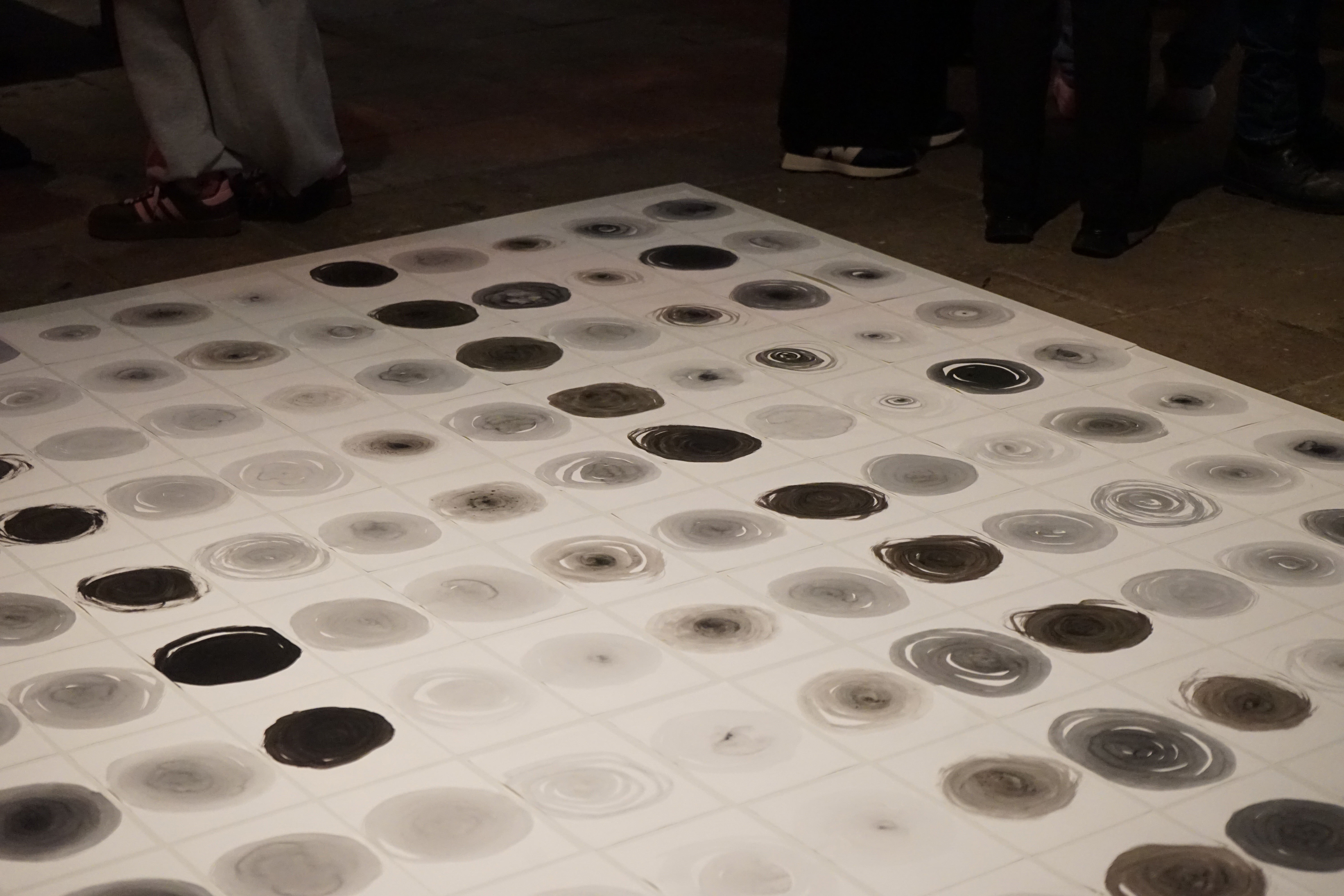
Of tears and spins. Laura Arensburg
To create work on the genocide, because, as Shada Safadi says, we are all victims. Exterminations reach us, even when we believe ourselves safe on the other side of the sea.
This piece arose from meeting Palestinian artists who came to Barcelona with Red Teja. Parallel to these encounters, Laura began drawing spirals daily. She realised months later that the first spiral coincided with the day she met the first Gazan artist.
The deepest connection was with Shada during her residency at La Escocesa. From their mutual curiosity, they found affinities and also differences that brought them closer. Thus, this piece is a question for approaching an aberrant reality, a search for possible forms against exterminating oppression, an attempt not to be paralysed and to continue creating work (and weeping) about the genocide.
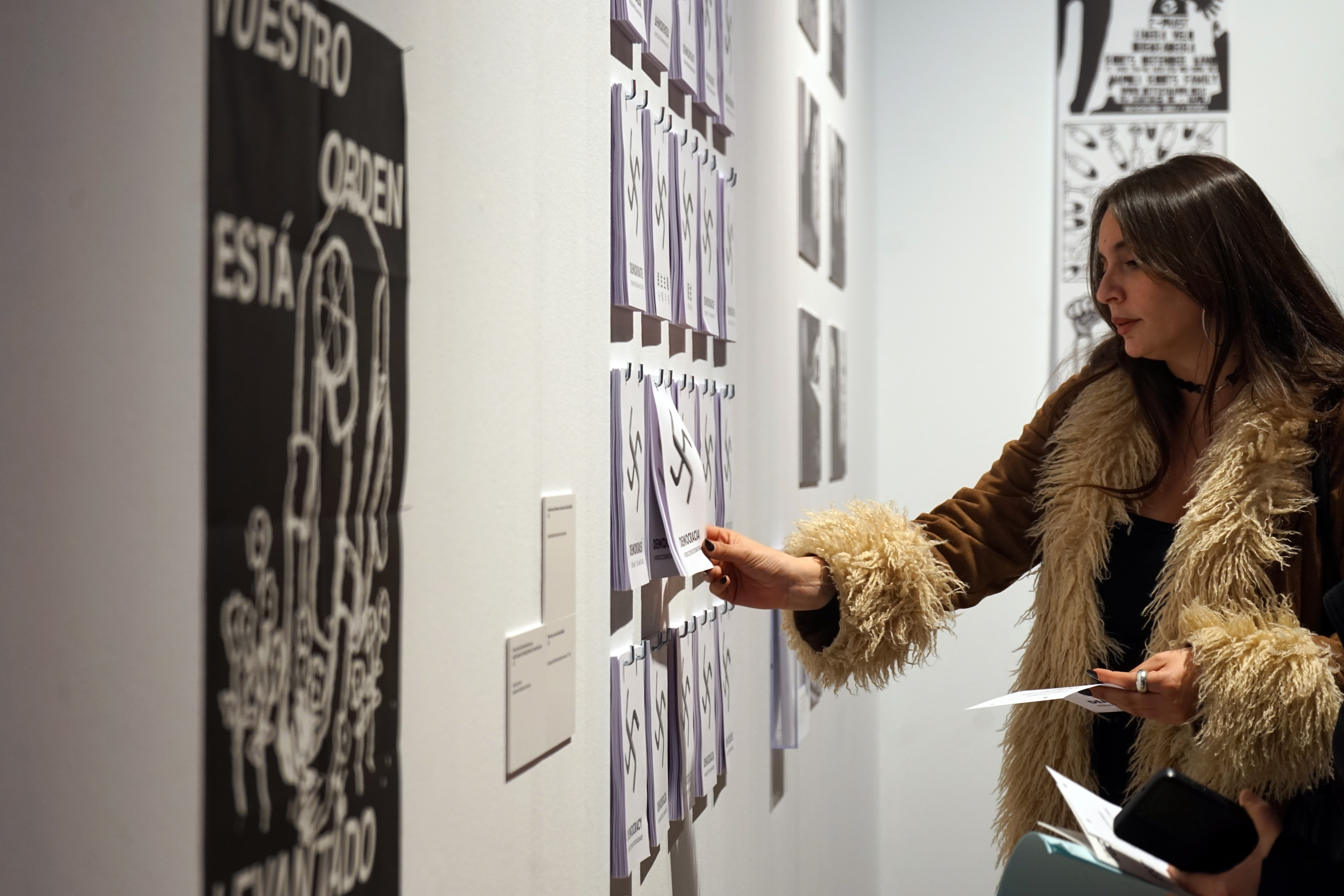
Instruccions per desmuntar una democràcia. Maria Kastillejof
According to The Economist's democracy index, there are only 25 full democracies in the world. Of these, eleven are monarchies, three are Commonwealth realms, and others have not formally apologised for recent war crimes, such as the Rape of Nanking or the recruitment of Korean sex slaves by Japan during the Second World War, the 1943 Bengal Famine perpetuated by the British Empire, Belgium's refusal to offer official reparations to the Congo, or the Spanish judiciary's obstruction of an investigation into the civil war's mass graves. Presented as ballot papers in the languages of these democracies, the piece references the book “How to Lose a Country: The 7 Steps from Democracy to Fascism” by Ece Temelkuran, which warns against reactionary populism based on the AKP's de-democratisation of Turkey under R.T. Erdoğan.
Todo rabo y poca oreja. Maria Kastillejof
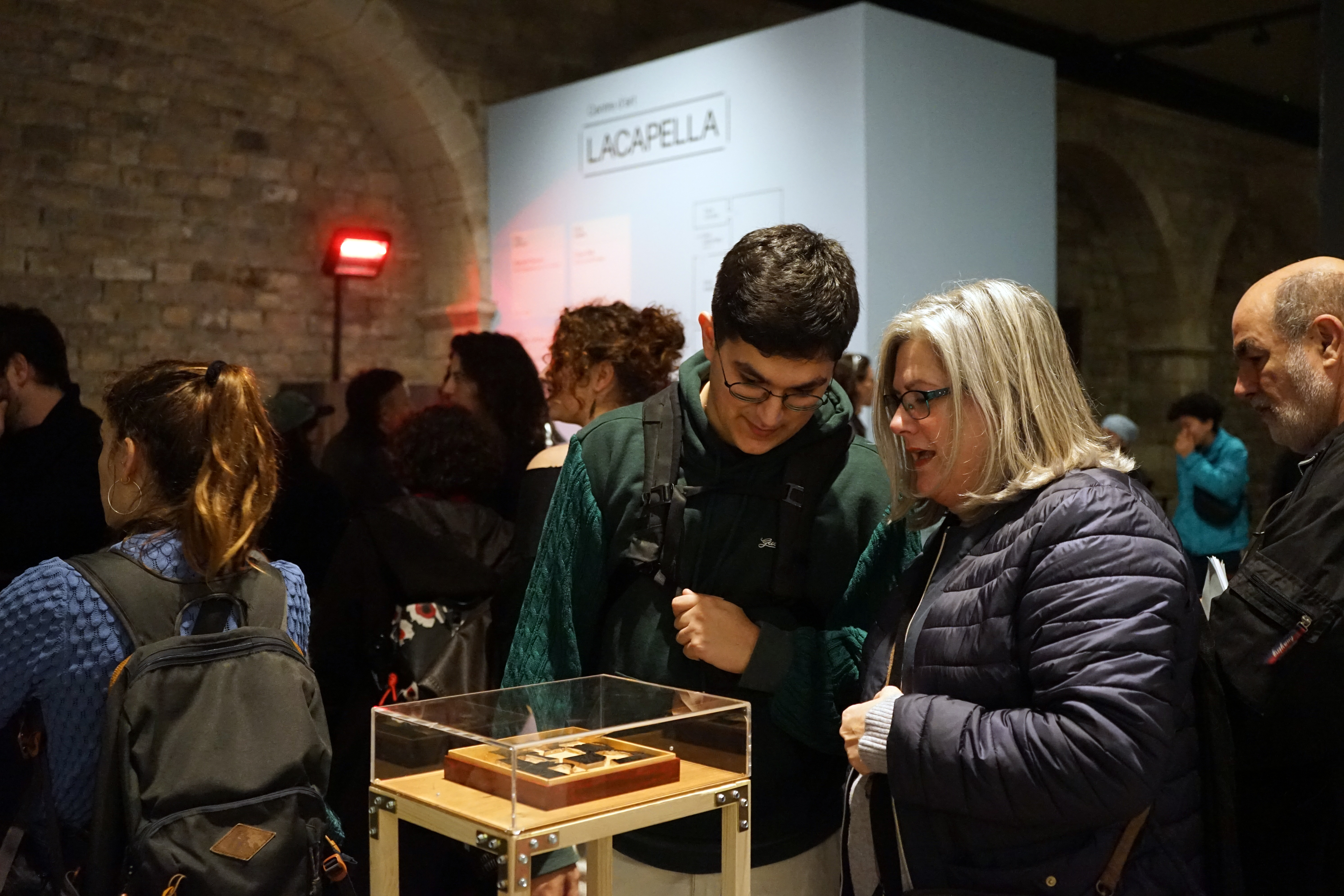
Derived from bullfighting slang, the expression “cortar rabo y orejas” is used to describe an action performed in an excellent and triumphant manner, referring to the act of cutting the bull's ears and tail as a trophy at the end of a bullfight. Fifteen mobile printing types make up the decapitated and disjointed figure of the Osborne bull, a national icon since its creation by a brandy brand in 1957 and a symbol of the stereotyped and reductive representation of Spain.
Mores than words. Ramon Parramon
It is not just about words, but about the discursive frameworks which, taken together, erode the very meaning of democracy. An increasingly polarised tension intensifies between the preservation of cultural diversity and the imposition of hegemonic models. This tension leads to the degradation of transcultural diversities and a progressive erosion of both rights and democratic values, and configures new forms of symbolic and political domination.
The growing alliance between economic and political power, along with the denaturalisation of the concept of democracy, intertwines with dynamics of geo-strategic neocolonialism, social injustice, and processes of peripheralisation. In a context of high complexity, and in the face of reductionist and ultranationalist policies, it is necessary to rethink the legitimacy of democratic values and rights from an intercultural perspective, as well as to review the theoretical frameworks that underpin global policies.
With the participation of Laura Arensburg, David Armengol, Francesc Barnes, Maria Kastillejof, Fabiola Díaz, Santiago Echeverri, Santiago Fernández Honrubia, Irati Irulegi, Azucena López, Federica Pagano, Anna Peixet, Vanesa Peña Alarcón, Núria Santamaria, Angelica Tognetti.
Puentes de transformación a cuatro voces Santiago Echeverri
Driven by the search for a dignified life, migration unfolds as a social movement characterised by its heterogeneity and constant change. Migrating is an act of hope and courage; crossing borders can trigger feelings of loss or powerlessness, but it also opens up new possibilities. Renouncing the certainty of one's homeland, personal relationships or native language gives way to something new.
This project seeks to explore these transformations through conversations and interviews. It aims to create a space where agency can be articulated through listening. For it is here, in the face of forces that seek to fix lives in binary imaginaries with historical antecedents, inscribing them in a logic of otherness and difference, that reparative bonds emerge, the capacity to face social and personal challenges and, at the same time, unprecedented forms of coexistence.
Mà-catapulta, pedra-pedra. Santiago Fernández Honrubia.
What happens before everything burns? What happens at the precise moment, before throwing the first stone? Is it a single stone that's thrown, or is it the gathering of many that escalates the conflict? A body leans back to gain momentum, a hand holds a stone, hand-catapult, stone-stone. A paving stone, born of the hammer's blow and the ground. It is projected to the other side [police, private establishment, public monument, institutional building].
‘Hand-catapult, stone-stone.’ proposes thinking of conflict as a political exercise [revolutionary gymnastics], which is part of a process capable of transforming democracy. In the face of the exhausted, passive and infertile contemporary Western/bourgeois/capitalist democracy that degrades this concept, we try to seek out imaginaries that present other possibilities for democracy.
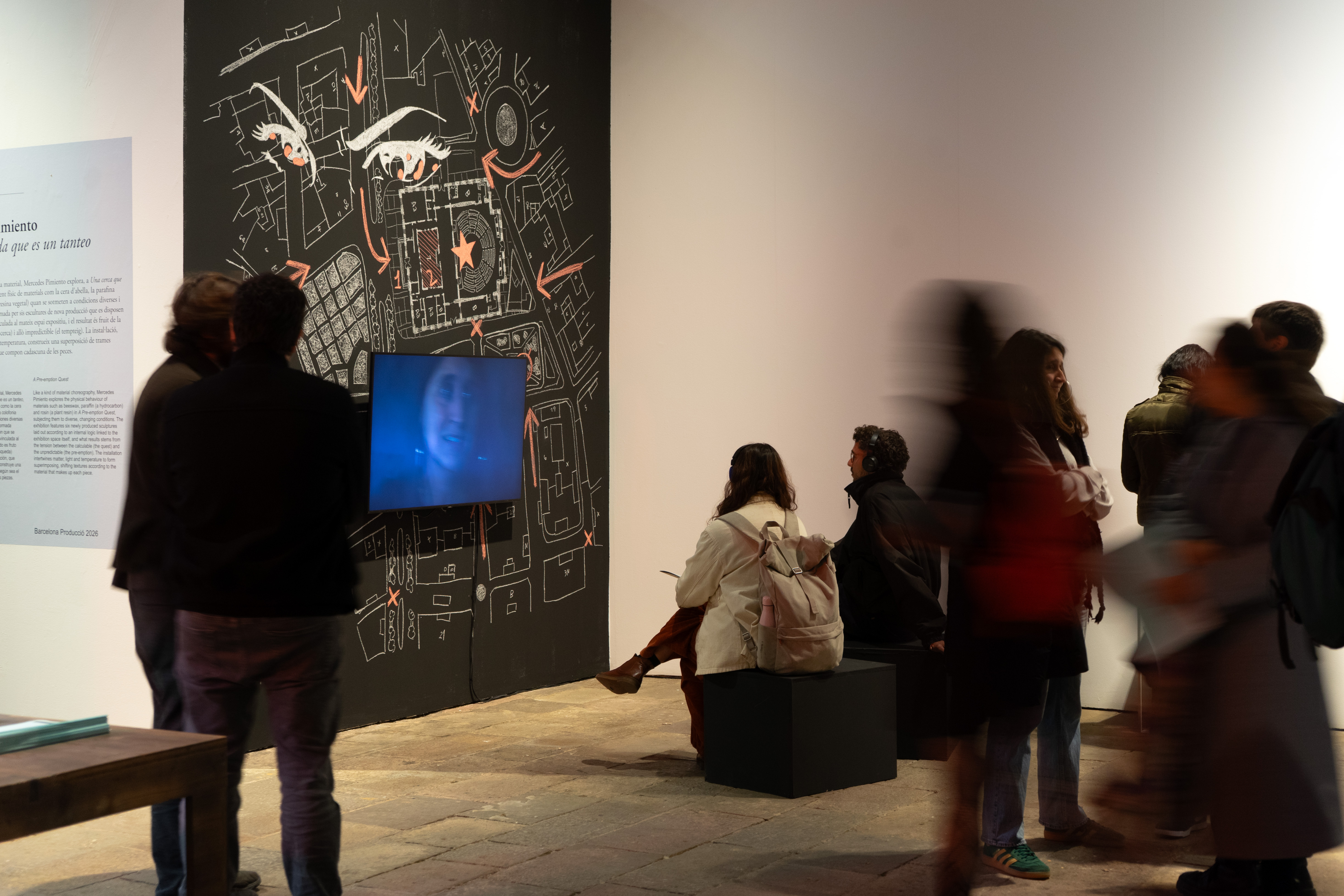
Vuestro orden está construido sobre arena.
Angélica Tognetti, Irati Irulegi (Idensitat) and Vanesa Peña Alarcón.
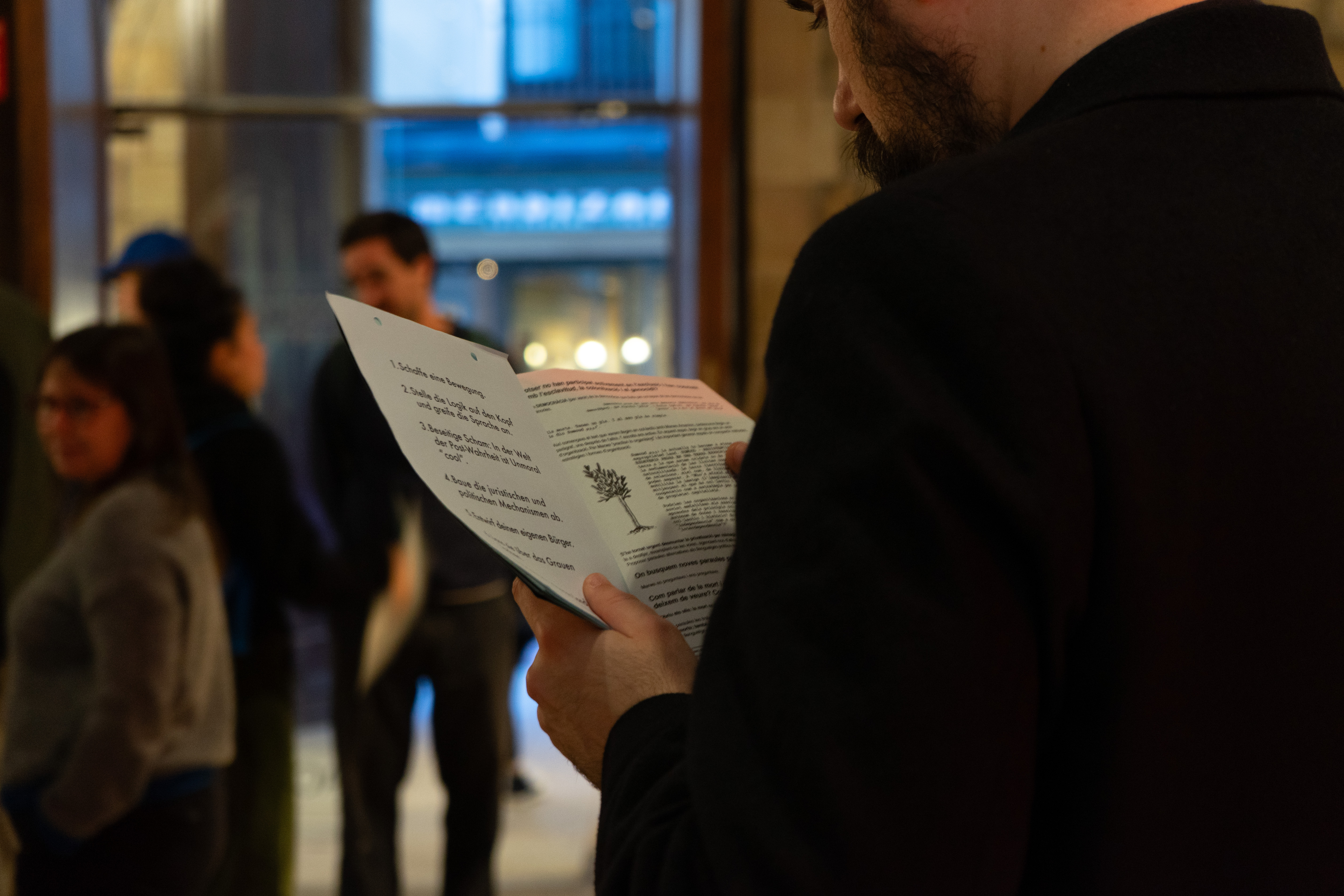
It is a manipulable textual and visual device that is touching and concerns us. Part of a curatorial reflection on democratic responsibility, the fragility of contemporary political systems and the so-called rise of (neo-)fascism. A collaborative work by Angélica Tognetti, Irati Irulegi and Vanesa Peña Alarcón, with drawings by María Kastillejof and graphic design by Federica Pagano.
Starting from the concept of montage – and as conceptual interruptions, textual re-foldings, questions that break in, or revealed recollections of the very working sessions developed with the Idensitat group Nosymmetries - the text establishes itself as a choral voice reflecting on the concept of democracy in order to stratify, like sand, the different layers, sediments and remains of their struggles to establish a new terrain for political imagination.
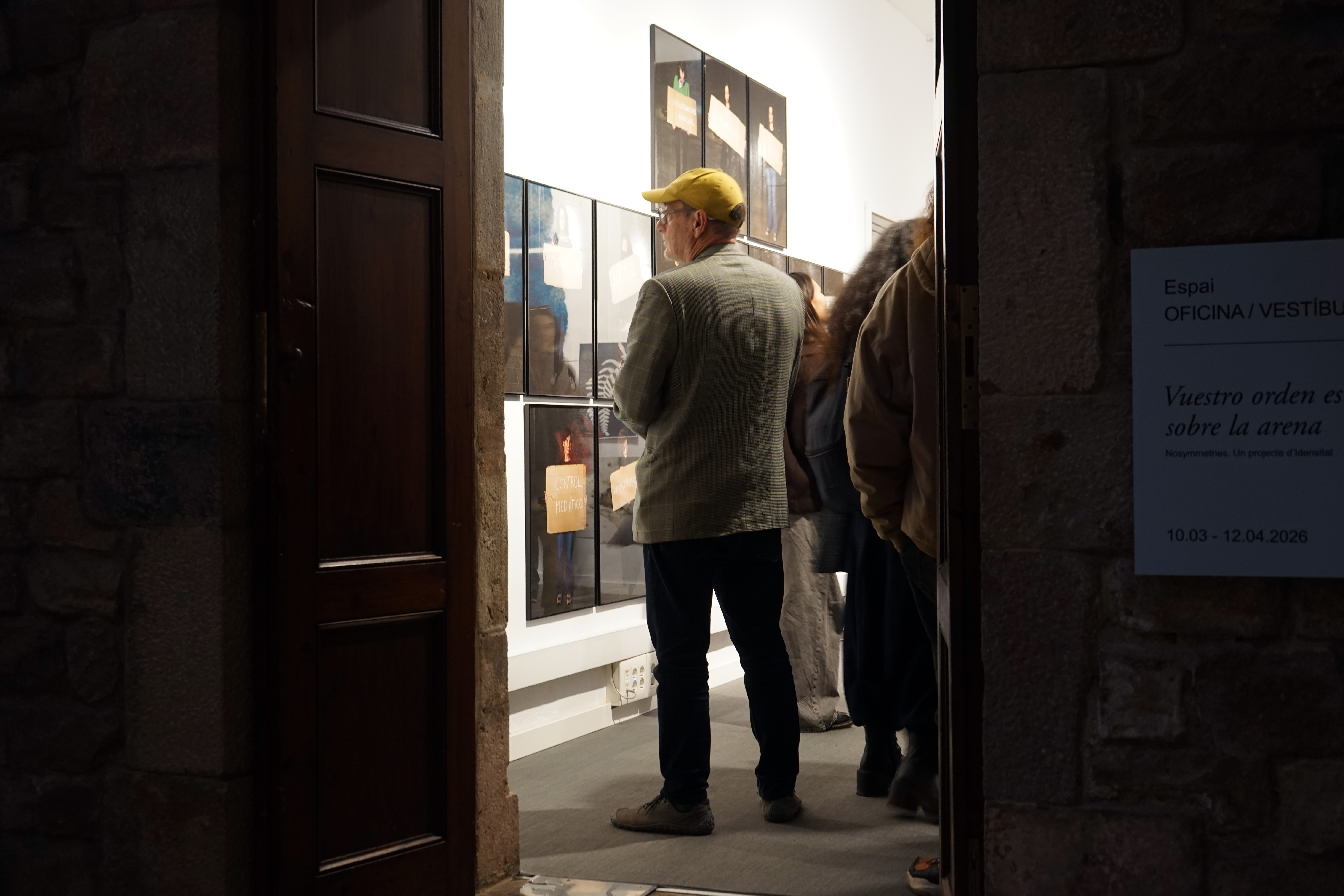
NOSYMMETRIES 2025-2026
Organised by Idensitat in collaboration with La Capella Center d'Art in the frame of Concèntric program. Supported by Generalitat de Catalunya, Department de Cultura.