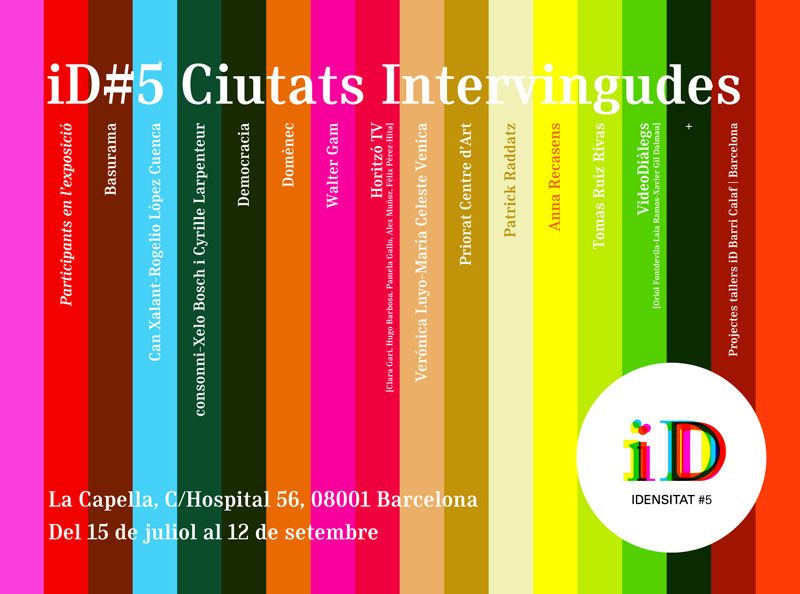
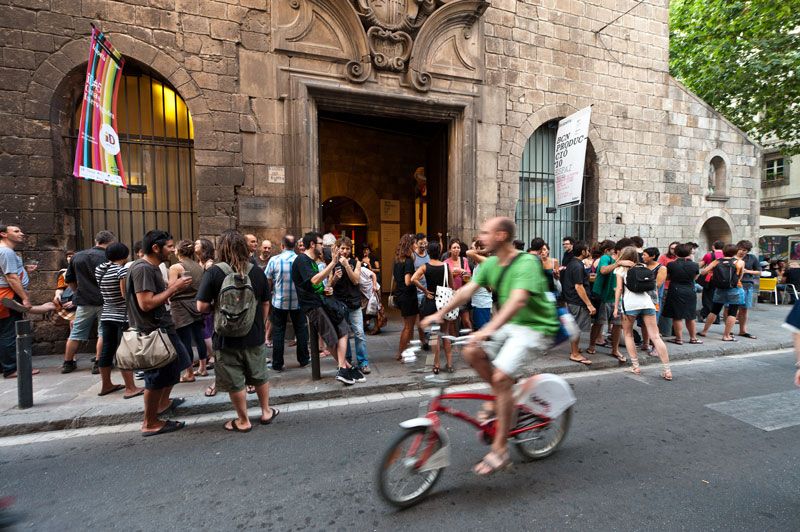
iD#5 Seized Cities. Exhibition. La Capella, Barcelona
15 July - 12 September
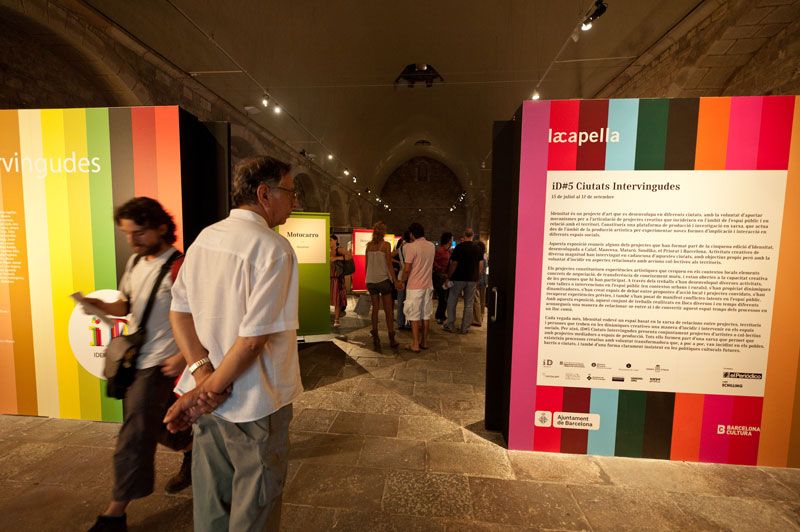
Idensitat is an art project developed in various cities with the intention of providing the tools to coordinate creative projects that influence the public sphere in relation to the region. Establishing a production and research network, this platform acts within the field of artistic creation in order to experiment with new forms of involvement and interaction in different social settings.
This exhibition brings together several projects that were part of the fifth edition of Idensitat. They were developed in Calaf, Manresa, Mataró, Sondika, El Priorat and Barcelona. The interventions that took place in each of these cities included creative activities of varying size and scale; each with their own unique targets but also aimed at influencing aspects that deal with collective actions that take place locally. On the whole, they represent artistic experiences that seek specific negotiation elements within local contexts, striving for a mutual exchange of knowledge while remaining open to the creative potential of every participant.
A series of activities were carried out parallel to these actions, including workshops, public interventions (in both rural and urban spaces), energising dynamics, the creation of forums to debate local and guest proposals for action; past experience was discussed and we managed to expose some of the conflict latent in the public sphere. In this exhibition, this collection of projects created in different places and at different times aspires to a way of relating to one another and to turn this space-time into processes, a common ground. More and more, Idensitat is becoming a keystone in the network of project relations, local areas and people that consider creative dynamics a way to intervene and affect social spaces.
For this reason, “iD#5: Ciutats Intervingudes” presents artists and collective projects as well as mediating projects and production spaces as a whole. They make up a network that allows for the coexistence of a variety of creative processes with a similar transformative drive, influencing towns, neighbourhoods and cities little by little, while creating pressure on the future of cultural politics.
Exhibition participants
Basurama, Can Xalant – Rogelio López Cuenca, consonni (Xelo Bosch and Cyrille Larpenteur), Democracia, Domènec, Walter Gam, Horitzó TV (Clara Garí, Hugo Barbosa, Pamela Gallo, Alex Muñoz, Félix Pérez-Hita), Verónica Luyo-María Celeste Venica, Priorat Centre d’Art, Patrick Radiate, Anna Recasens, Tomás Ruiz Rivas, VideoDiàlegs (Oriol Fontdevila, Laia Ramos, Xavier Gil Dalmau)
iD Barrio Calaf / Barcelona
Jardins Temporals a Calaf project workshop coordinated by: Josep-Maria Martín in collaboration with Jean Nicolas Fauchille
iD Barri Raval project workshop with KUNSTrePUBLIK (Markus Lohmann, Harry Sachs, Philip Horst, Daniel Seiple, Matthias Einhoff)
iD Barri Traces of Autism project workshop (Jozua Zaagman, Maartje Dros, Jacqueline Schoemaker)
Participants and creators of the work carried out in the workshops
Juan Aizpitarte, Dimas Agudo, Maria Aparicio, Mauricio Aquilar, Elena Azzeddin, Aida Bañeras, Iria Beltrán, Eduardo Blanco, Emanuela Bove, Naomi Bueno, Maria Calvo, Verónica Cantero, Guillermo Cantillo, Marta Carrasco, Maria Cedo, Banu Çiçek, Ana Cortes, Adrián Crescini, Angelica Cuadros, Marcos Cuesta, Arturo Dávila, Urko Diaz, Aida Elias, Abigail Empez, Laura Font, Julia Adam, Eva Garrido, Aloma Giralt, Eva Goenaga, Berta González, Paula González, Evanguelina Guerra, Fernando Hidalgo, Irune Jiménez, Arantza Lacasa, Laura Lara, Carolina Lopez, Lorena Lozano, Maria Lucas, Andreas Manenti, Maria del Mar Roldán, Ester Márquez, Andres Martínez, Maria Martínez, Carolina Mila, Daniela Monterrossa, Yera Moreno, Belen Orta, Carla Pagluica, Jesús Palomino, David Peña, Toledo Pérez, Maria Pia, Marta Raventos, Natalia Royo Parache, Lore Pardón, Marc Piqué, Antoni Puig, Mercè Ramos, Romina Rebolledo, Inés Salpicó, Laia Segura, Anita Serrano, Liron Shua, Alexandra Souza, Amalia Speratti, Eulàlia Suñé, Arena Tarres, Gracia Teixidor, Maria Terkenli, Gaizka Ugalde, Meg Vandezande, Noelia Varela, Maria Valldeperez, Guillem Vilamala, Ivonne Villamil, Raquel Villar, Madalena Yglesias, Estíbaliz Yuguero, Erika Yurre.
Idensitat is supported by Manresa City Hall, Calaf City Hall, the Government of Catalonia’s Ministry of Culture and Communication Media and Barcelona Provincial Council. Projects developed in collaboration with Can Xalant (Centre for Contemporary Creation and Investigation in Mataró), Priorat Centre d’Art, Prat de Llobregat City Hall, Consonni (Sondika), La Capella (Barcelona) and Hangar (Barcelona, member of Xarxaprod, network of creative production centres). In collaboration with Artwork’09 (Catalan Ministry of Labour, European Social Fund and Barcelona Provincial Council), Goethe Institute Barcelona, Consulate of the Netherlands, Elisava School of Design.
Idensitat#5
Management: Ramon Parramon
Team: Maral Mikirditsian | Quim Moya | Nuria Parés | Anna Recasens | Eva Quintana
Design and graphics: Jang Sub Lee
Selection committee: Francesca Comisso (independent curator, member of the a.titolo collective and professor at the Turin Polytechnic University)| Iris Dressler and Hans D. Christ (directors of WKV Württembergischer Kunstverein Stuttgart) | Daniel García Andújar (artist) | Ramon Parramon (artist and director of Idensitat) | Martí Peran (independent curator and full professor at the University of Barcelona).
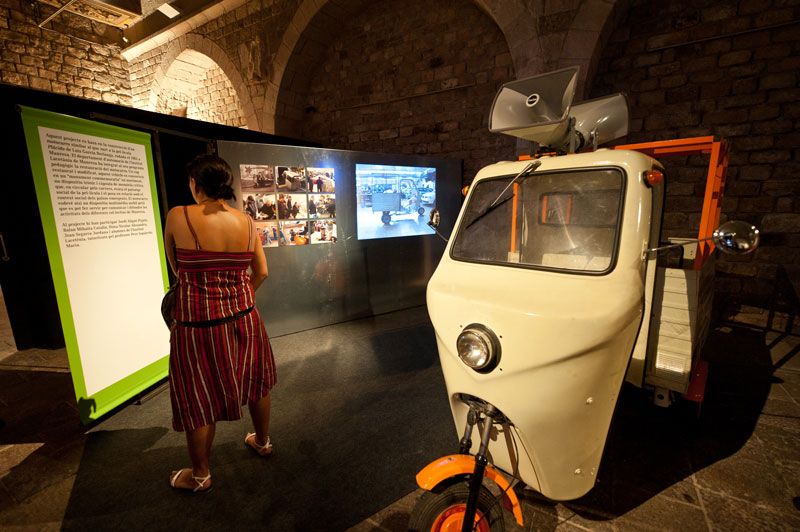 Motocarro
Domènec
This project is based on the construction of a three-wheeler van similar to the one that appeared in the film Placido by Luis García Berlanga, shot in 1961 in Manresa. The Automotive Department of the Lacetània Institute in Manresa integrated the restoration of this three-wheeler van into their core curriculum. Once it was restored and modified, this vehicle became a moving “commemorative monument”, an ironic device as well as a capsule of critical memory. As it roams the streets it evokes the social landscape of the film and sets it against the social context of developing countries. Thus, the Motocarro becomes a small mobile multimedia device that can be used to communicate and disseminate the activities of various different social groups in Manresa.
Participants in the project include: Jordi Aligué Pujals, Balan Mihalta Catalin, Dima Nicolae Alexandra, Joan Segarra Jordana and students of the Lacetània Institute led by professor Pere Izquierdo Maria.
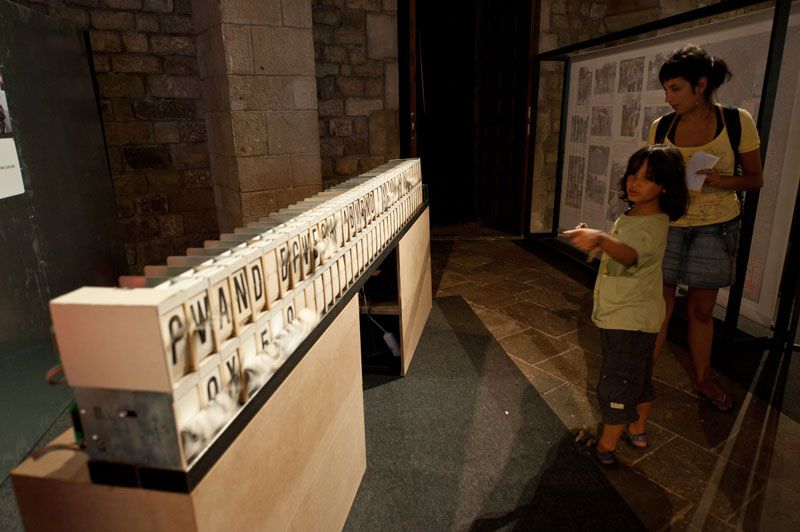 Disjecta
Patrick Raddatz
Disjecta displays fragments of selected texts and conversations. This installation generates messages and reorganises them randomly. The display time for each fragment is different and unpredictable. Letters, words and entire phrases interchange in a constant alteration of meaning. With this piece, the artist offers a reflection on the malleable and ephemeral nature of memory and opinion. The meanings that are derived evoke subjective understanding and interpretation, transmitted via a device used in spaces of transit: the arrivals board in a train station. The precise messages that it once communicated are now replaced with texts written by chance, open to interpretation.
The project was realized in collaboration with the Manresa Municipal Conservatory of Music.
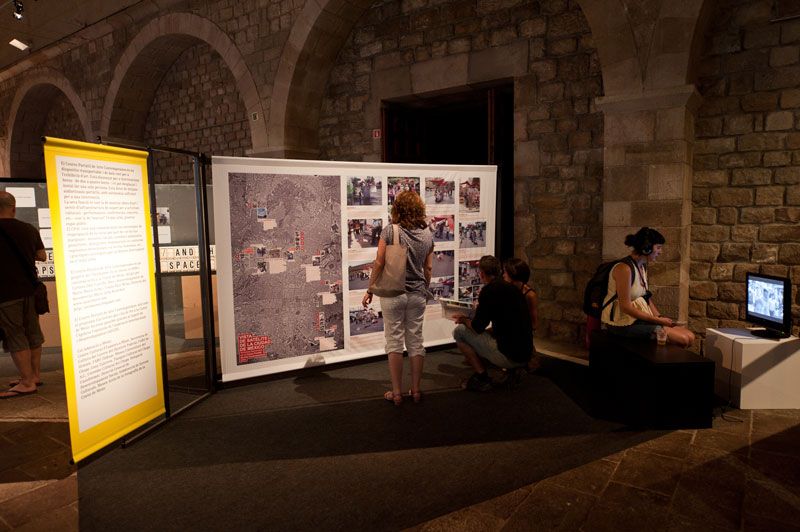 Centro Portátil de Arte Contemporáneo
Tomás Ruiz-Rivas
Centro Portátil de Arte Contemporáneo (Portable Centre of Contemporary Art) is a low-cost mobile device used to exhibit art. It is designed for brief interventions, two to four hours in length, and can be moved and installed by a single person. It is equipped with portable audiovisual media, with sufficient range for its display. It has the capacity to show pieces of art and to serve as support structure for cultural activities, performances, lectures and concerts, as well as “marking” urban space and in so doing generating public space. CPAC draws a connection between appropriation strategies that marginalised groups employ in the city: racial minorities, street vendors, prostitutes, immigrants, homosexuals in repressive environments, certain groups of women, and artistic practices that influence urban space directly. Centro Portátil de Arte Contemporáneo is a project by the Antimuseo. It was initiated in 2009 and is still active in Mexico City, headed by the artist Eder Castillo. Idea and development by María María Acha and Tomás Ruiz-Rivas. Documentary directed by Mario Acha Kutscher. www.ojoatomico.com, http://antimuseo.blogspot.com/
Centro Portátil de Arte Contemporáneo and the agenda of activities to be carried out in Mexico City have been possible thanks to the support of the Spanish Agency for International Cooperation and Development (AECID).
Collaborators in Mexico:
• Spanish Cultural Centre in Mexico
• Ministry of Culture of the Government of Distrito Federal
• FARO de Oriente
• FARO Tláhuac
• Chopo University Museum
• Casa Talavera
• Tianguis Cultural Chopo A.C., Corredor Cultural Chopo, Cuauhtémoc Regional Government, Directorate General of Social Development, Sub-directorate of Cultural Services
• Archive of Photography Museum, Mexico City
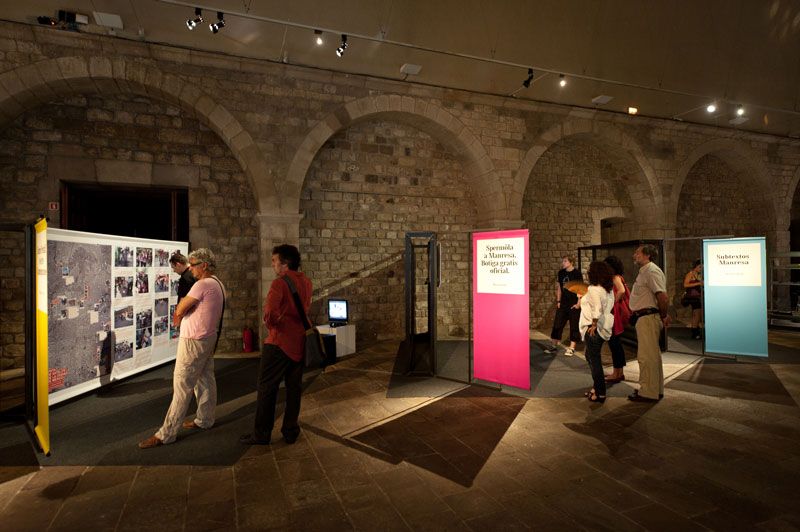
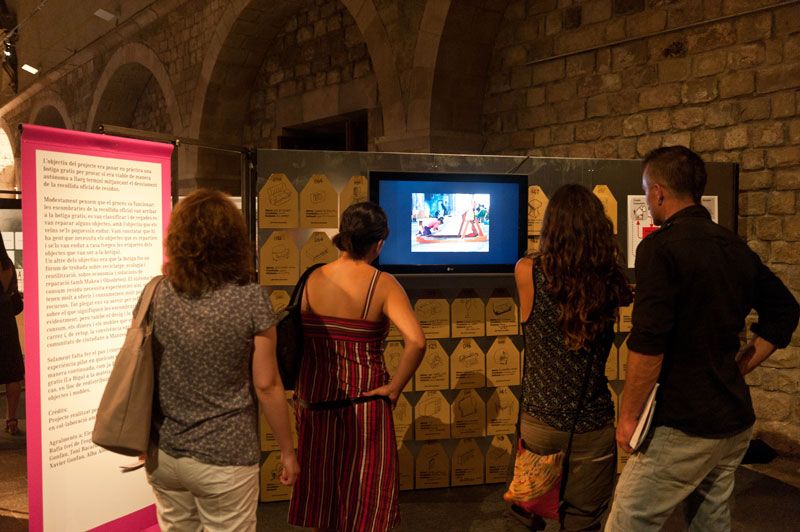 Spermöla en Manresa: Tienda gratis oficial
Basurama
The objective of Spermöla en Manresa: Tienda gratis oficial (Spermöla in Manresa: Official free goods shop) is to develop a free goods shop and test its long-term viability as it redistributes waste from the city rubbish disposal.
We modestly believe that it worked: the rubbish was brought to the free goods shop, organised (and sometimes repaired) so that local inhabitants could come and pick things out. We were able to assess its success: there were people who needed the objects available and were able to take them away. (See tags of the objects that were in the store.) A second objective was for the shop to become a meeting point and forum on recycling, ecology and reuse, economy and repair solutions (with Makea and Obsoletos). Society’s consume/waste system benefits from projects such as this, projects where the result far outweighs the consumption. This reflects on the meaning of rubbish, of course, but also on the ideas of desire and need, consumption, money, the meaning of furniture strewn on the street and, as an added bonus, the coexistence between various communities of inhabitants in Manresa. The missing step for this project is to transform this pilot experience into a long-term sustainable project, a process initiated by La Biga, another free goods shop in the same city. It redistributes objects and furniture rather than clothes.
Credits:
Project realized by Basurama with Lucysombra in collaboration with Makea and Obsoletos.
Special thanks to: Elena, Ami and Marta (La Biga), Abd El Rafia (the church neighbour) Toni Lodeiro, Xavier Gonfau, Toni Bacardit, Xavier Bosch, Marta Mena, Xavier Gonfau, Alba Alsina, Charity Blansit.
 Subtextos Manresa
Democracia
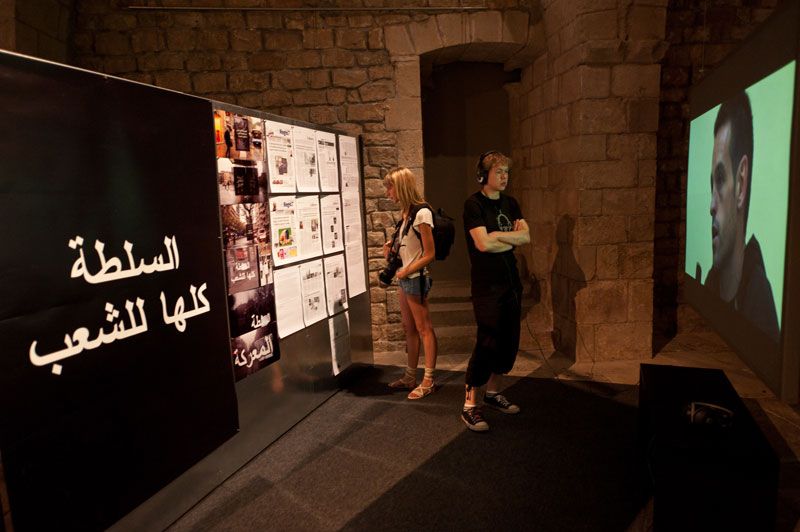
This is a project that interacts directly with a specific social group. It consisted of placing messages written in Arabic in sign boxes in the city and creating adverts that were broadcast on local television. These messages demonstrate the mixed reality existing among local populations. On one hand, the language used will be visible only to the Arab community, and on the other, the rest of the inhabitants are made aware of the existence of this group as present in social life with their own cultural particularities. The second stage involved a series of encounters in collaboration with Bages per a Tothom, an organization that works toward intercultural dialogue. The resulting material will be used to broadcast an episode of “El Gresol”, a local Manresa television program run by Bages per a Tothom.
 Can Xalant
El revés de la trama
A project by Rogelio López Cuenca for Can Xalant and “Idensitat#5”
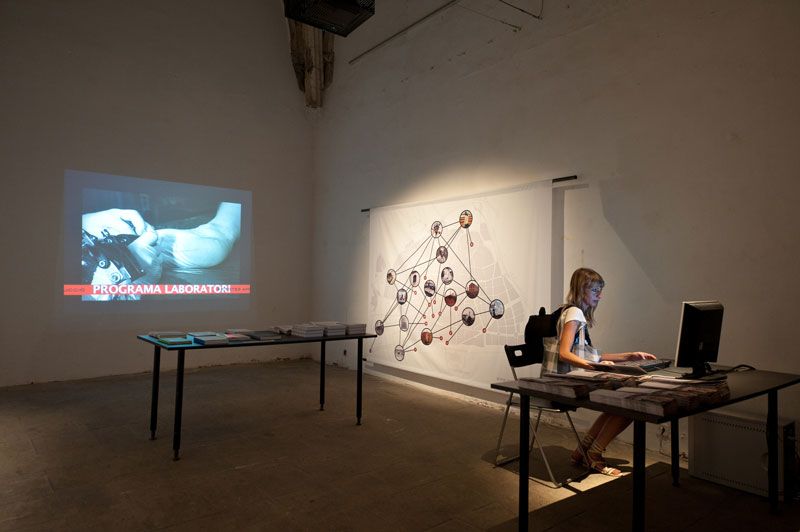
Can Xalant, the Centre for Contemporary Creation and Investigation in Mataró, is a space dedicated to production, research and project development in the field of contemporary visual arts, as well as a meeting place for artists from around the world. Their main objective is to produce projects with a high level of commitment but also to debate contemporary artistic discourse in the most multifaceted way possible. Can Xalant is part of an extensive network of collaborators with which a programme of exchange, residences and other activities is in place.
Can Xalant has participated in Idensitat since 2007, contributing residency and production costs for one of the selected projects to be carried out in Mataró. In September 2008, Rogelio López Cuenca and Can Xalant organised a workshop entitled “Derrotes Alternatives: Now/Here Mataró” (Alternative defeats: Now/Here Mataró). As a result, a work group emerged that included Roser Caminal, Ismael Cabezudo, Laura Marte, Cecilia Postiglioni, Daniela Ortiz and Anna Recasens. Together with Rogelio López Cuenca, this work group performed the research that would later become the core of the “Idensitat#5” project. El revés de la trama (The other side of the plot) is a research project that developed an itinerary that allows us to view local history using a cross-disciplinary approach, simultaneously making certain events visible that were once isolated, pigeonholed, frozen in time or locked in specific spaces. The final result of the project is the creation of an alternative city map of Mataró and the website map found at www.mapademataro.net
 iD+consonni Sondika 09: Jueves Milagro
consonni
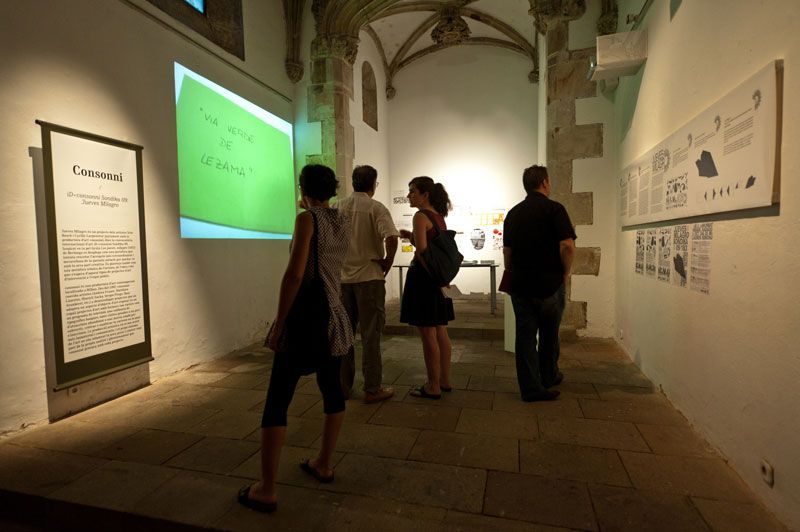
Jueves Milagro (Thursday miracle) is a project by the artists Xelo Bosch and Cyrille Larpenteur together with the art production company consonni, within the international open call “iD+consonni Sondika 09”. “iD+consonni Sondika 09” was supported by the Sondika town council, the Regional Government of Bizkaia and the Government of the Basque Country. Jueves Milagro is based on the movie Los jueves, milagro (1957) by the producer Luis García Berlanga. The work unfolds as a metaphor which tries to salvage the most extraordinary and wonderful meaning of the word “miracle” (milagro) to maintain its creative aspect. It is also presented as an ironic metaphor of the artist, of the artwork and of what is expected of artistic projects which intervene in public space.
consonni is a contemporary art production company located in Bilbao. Since 1997, consonni invites artists (Andrea Fraser, Matthieu Laurette, Hinrich Sachs, Sergio Prego, Ibon Aranberri, Saioa Olmo, Iratxe Jaio & Klas van Gorkum, Virginia Villaplana...) to develop projects that do not adopt the aspect of an artwork exhibited in a space; art projects with formats as varied as a television programme, an auction of Basque typographies, guided visits to an abandoned amusement park or a zombie march to subvert, criticize or analyze the society to which they are belong. The artistic production, in its most non-material and communicative sense, and the art system itself, are not only its praxis and context, but also part of the analyses and questioning that consonni raises with each project. www.consonni.org
 Priorat Centre d’Art
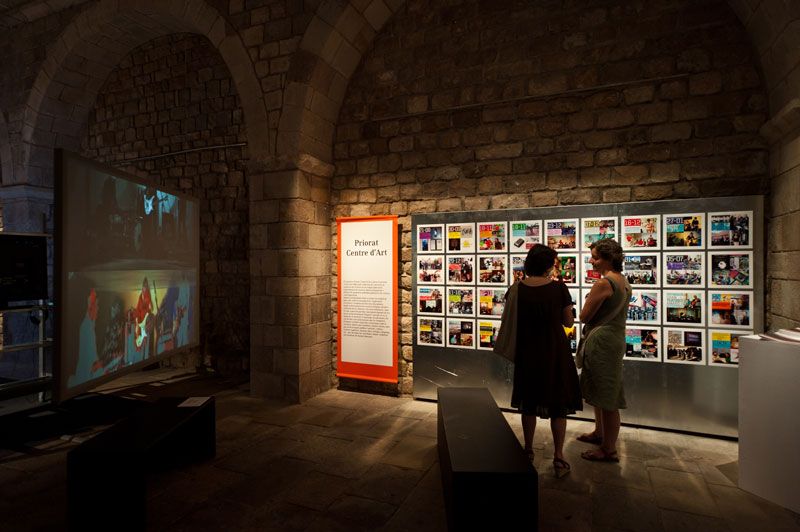
In the summer of 2006, the project Priorat Centre d’Art (Priorat art centre) begins its activities with the aim to transform the Priorat region into an experimental space/laboratory for research, development and dissemination of multidisciplinary approaches in contemporary culture. This program carries out foundational work which, with the incorporation and contribution of artists and creators of different disciplines, has direct implications for the social and cultural characteristics of the region and its inhabitants. Its conceptual starting point includes some of the region’s physical and social features: the wine, the minery, the land, the landscape, the people and the groups and associations that it consists of. The project produces specific works related to the region and, at the same time, it establishes and maintains links to a series of public and private spaces (cellars, theaters, churches, museums, bars, shelters, campsites, etc.) to spread the news of the activities and to make the results visible in an intinerant manner.
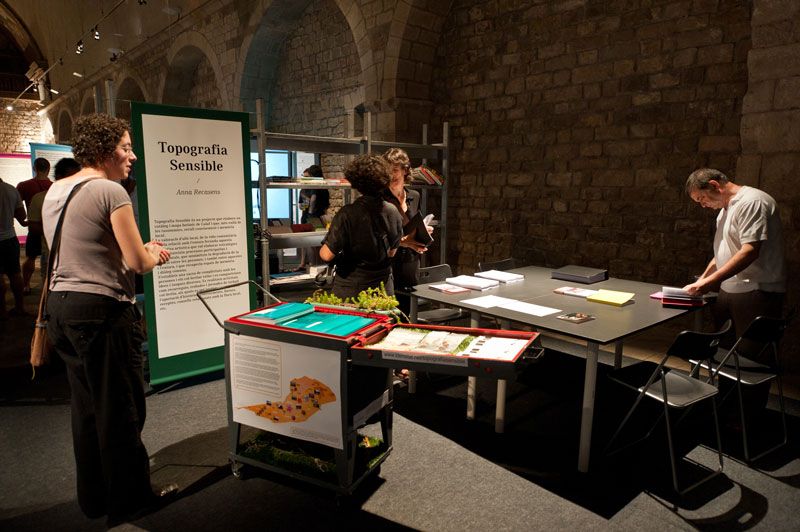 Topografia Sensible
Anna Recasens
The final result of the project Topografía Sensible (Sensitive topography) is the creation of a catalog and a botanical map of Calaf, but rather than focusing only on taxonomies, it also gathers local memory and knowledge. This artistic initiative evaluates relations to the surroundings, of what is local and of community life while it aims to elaborate strategies favouring horizontal and participatory processes that minimise the deterioration of relationships between people and between people and their surroundings, and which recover spaces of shared memory and dialogue. A network of cooperation is established with the neighbouring people and groups with which the project collaborates by sharing both ideas and tasks. Activities such as tours, meetings and group workshops are carried out in which one can participate by contributing stories, knowledge, seeds, recipes, giving advice on local flora, etc.
 Cercant Parents
Verónica Luyo, María Celeste Venica | iD Dispositiu Itinerant (“iD Travelling Device”)
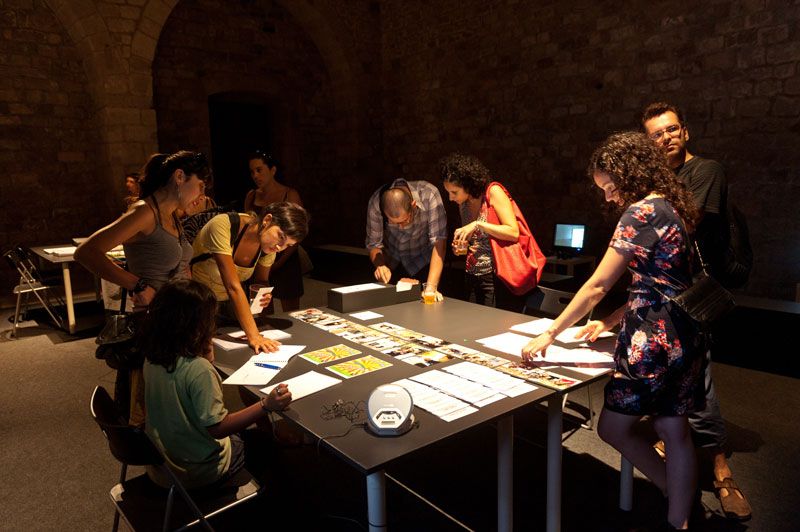
Cercant Parents (Searching for relatives) was a project selected in the open call for intervention in public space in Manresa, through the Dispositiu Itinerant d’Idensitat (“Idensitat Travelling Device”). The project consisted of creating an exchange situation. A cooked dish, with a product from the Americas (the potato) as the main ingredient, was exchanged for an object, photograph or story. An archive of the imaginary of the Americas in Europe was to be constructed. The activity enabled materials to be obtained which could be used as reference material, sources for further work and/or research. This material was constructed from the combination of memory (sometimes in the form of a nostalgic idealisation or as an opinion of a particular social-political circumstance), confrontation with another reality and stereotypes promoted by the media or the souvenir, each contributed by the people that participated in the exchange. Moreover, a register was made of the exchange and communication between strangers while sharing stories and a small meal in a public space (in this case, in Manresa). You can see register at the following blog: www.buscandoparientes.blogspot.com
IDtv: VídeoDiàlegs
Oriol Fontdevila, Laia Ramos, Xavier Gil Dalmau
IDtv: VídeoDiàlegs (IDtv: Video dialogues) is a video documentary about Idensitat. It is based on dialogues with the artists and stakeholders involved in carrying out the artistic approaches. The goal was to present a videographic narrative which could then be used for evaluative purposes and as a communicative tool to promote the project, as well as to encourage a debate about artistic creation and contemporary culture based on the cases and specific situations brought forth by Idensitat.
Plató Volant
Horitzó TV (Clara Garí, Hugo Barbosa, Pamela Gallo, Alex Muñoz, Félix Pérez-Hita)
The platform “Horitzó TV” suggested the project Plató Volant (Flying set). Plató Volant is a travelling set that integrates itself into the communities and creates its own online television channel. The project’s proposed using television programmes to make social processes, debate, dialogue, creation and the ideas of the people, more visible. Made by the people themselves, these programmes were to be both broadcasted live and shown on the online television channel at http://horitzo.tv, http://idensitat.net, and http://calaf.cat. From 18 to 23 May, “Horitzó TV” carried out the preliminary research work for Plató Volant during a creative residency in Calaf, including a pilot programme and observation tasks. The live broadcasts took place from 22 to 28 June. These appeared on Horitzó TV’s Idensitat#5 page, and they were also available for viewing after the broadcasts. From 6 to 13 November, Telecalafffff, a workshop about cooking recipes, was developed for online television. Given that a few years ago Calaf had its own television channel, this workshop was created with the aim of bringing back the enthusiasm that made this possible at the time, and to retrieve some of the old programmes that were broadcast back then.
A fora i a dintre vostre hi ha un univers (Inside and outside you, there is a Universe)
Walter Gam
As part of the current open call iD#5, Walter Gam, a Brazilian artist and resident of Belo Horizonte (Brazil), was in Calaf from the beginning of June until 15 July. During his stay he developed various activities, including one in collaboration with primary school students. This activity consisted in creating flags to be placed by the five entrances to the village. He also distributed different messages in various locations of the urban space of Calaf that encouraged reflection. In addition to these participatory actions, Walter Gam made a series of short videos. In these videos he captured the characteristics of the place which define his perception of the village: the sea breeze, the special locations... Before his departure he made a public presentation of his work while sharing a table and tasting products typical of the area.
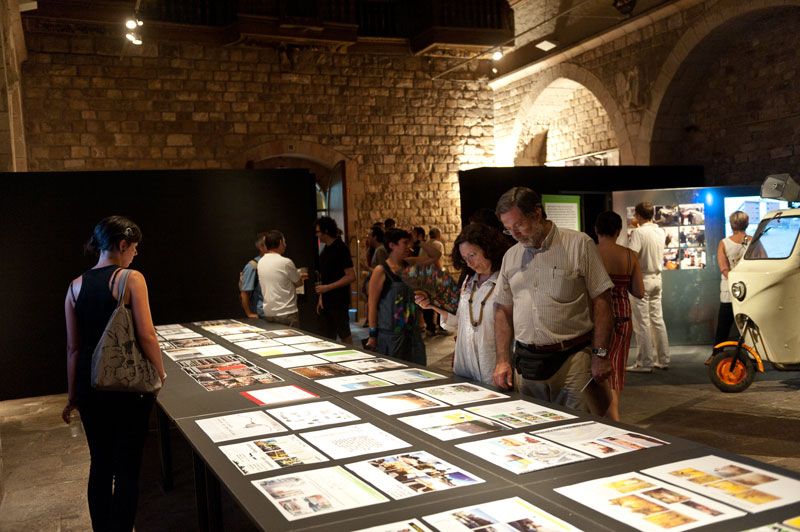 iD Barri Calaf|Barcelona (iD Calaf neighbourhood / Barcelona)
iD Barri (iD neighbourhood) is a project linked to “iD#5”. From an urban perspective, and through the relation that exists between art, social creativity and the transformation of the environment, the project explores the concept of “neighbourhood”. The project consists of three interconnnected parts: seminar, workshop and exhibition (“Travelling Device”). It was developed both in Calaf and in Barcelona, helping the concept “neighbourhood” to be studied in the context of small towns and villages in rural areas, and in relation to the metropolis.
iD Barri begins with the idea that since art is able to make latent social creativity emerge and unfold through collective actions, it can also be an innovative factor in the processes involved in a city’s transformation. This statement can easily be presented as a question as it introduces the following issues that are to be answered, contrasted and expanded within the context of the linked seminar and workshops: How does art relate to the processes of social and urban transformation? Which role and function do participatory processes have? How can social creativity be activated in a specific environment? How can creative processes, that will influence a specifc environment unfold in the mid- and long-term? How can people participate in areas of collective action through creative processes? Is the transformation of the city open to projects? What relation exists between cultural politics and regional planning? Which consequences do local contexts have to assume in order to form part of the global cultural dialogue?
Projects developed during the group of workshops in the context of iD Barri Calaf (iD Calaf neighbourhood) and iD Barri Barcelona (iD Barcelona neighbourhood):
Project workshop Jardins Temporals a Calaf coordinated by Josep-Maria Martín in collaboration with Jean Nicolas Fauchille
Project workshop iD Barri Raval with KUNSTrePUBLIK (Markus Lohmann, Harry Sachs, Philip Horst, Daniel Seiple, Matthias Einhoff)
Project workshop iD Barri Traces of Autism (Jozua Zaagman, Maartje Dros, Jacqueline Schoemaker)
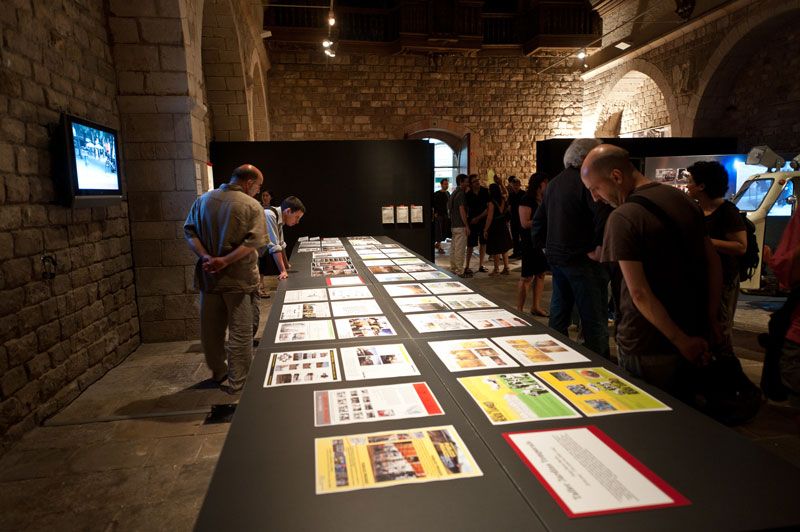 Participating members of workshops organised within the project iD Barri Calaf / Barcelona (iD Calaf / Barcelona neighbourhood)
Juan Aizpitarte, Dimas Agudo, Maria Aparicio, Mauricio Aquilar, Elena Azzeddin, Aida Bañeras, Iria Beltrán, Eduardo Blanco, Emanuela Bove, Naomi Bueno, Maria Calvo, Verónica Cantero, Guillermo Cantillo, Marta Carrasco, Maria Cedo, Banu Çiçek, Ana Cortes, Adrián Crescini, Angelica Cuadros, Marcos Cuesta, Arturo Dávila, Urko Diaz, Aida Elias, Abigail Empez, Laura Font, Julia Adam, Eva Garrido, Aloma Giralt, Eva Goenaga, Berta González, Paula González, Evanguelina Guerra, Fernando Hidalgo, Irune Jiménez, Arantza Lacasa, Laura Lara, Carolina Lopez, Lorena Lozano, Maria Lucas, Andreas Manenti, Maria del Mar Roldán, Ester Márquez, Andres Martínez, Maria Martínez, Carolina Mila, Daniela Monterrossa, Yera Moreno, Belen Orta, Carla Pagluica, Jesús Palomino, David Peña, Toledo Pérez, Maria Pia, Marta Raventos, Natalia Royo Parache, Lore Pardón, Marc Piqué, Antoni Puig, Mercè Ramos, Romina Rebolledo, Ines Salpico, Laia Segura, Anita Serrano, Liron Shua, Alexandra Souza, Amalia Speratti, Eulàlia Suñé, Arena Tarres, Gracia Teixidor, Maria Terkenli, Gaizka Ugalde, Meg Vandezande, Noelia Varela, Maria Valldeperez, Guillem Vilamala, Ivonne Villamil, Raquel Villar, Madalena Yglesias, Estíbaliz Yuguero, Erika Yurre.
Project workshop Jardins Temporals (Temporary gardens), Josep-Maria Martín. 29 June 2009 – 3 July 2009
Through the project iD Barri Calaf (iD Calaf neighbourhood), Idensitat organised the workshop Jardins Temporals (Temporary gardens). The aim was to develop proposals for temporal interventions in abandoned plots located in Calaf. The workshop, coordinated by Josep-Maria Martín in collaboration with Jean Nicolas Fauchille, was included in the “Hivernaclecultural” project. It intended to create a laboratory of participation and reflection focused on the public space and surroundings of Calaf, aiming to make this innovative intervention an experience which would lead to the transformation of the abandoned plots from wastelands to lively, regenerated and beautiful spaces able to offer value, self-esteem and integration, as well as to promote community life.
Workshop KUNSTrePUBLIK, 30 November 2009 – 4 December 2009
The KUNSTrePUBLIK collective (Markus Lohmann, Harry Sachs, Philip Horst, Daniel Seiple, Matthias Einhoff) coordinated this workshop about the Raval neighbourhood while using La Capella as a working space. During the workshop, specific proposals were carried out based on relating exploration of the surroundings, analysis of the space and social activism and participation.
Workshop Traces of Autism, 30 November 2009 – 4 December 2009
Traces of Autism (Jozua Zaagman, Maartje Dros, Jacqueline Schoemaker) is a multidisciplinary collective which bases its work on regional analysis and cartography. This work is carried out by travelling across public spaces collecting different objects with the goal of setting up an archive of found objects. The archive is then used to create maps, texts, images and videos. The workshop consisted of following this methodology throughout Barcelona. The participating members of the workshop were designers, artists, architects and students of the Master’s programme in Design and Public Space at Elisava School of Design.